

HeatScan

Internal pipe
inspection system

Detects steel pipe defects and evaluate the remaining service life of defective areas
ORDER (price on request)
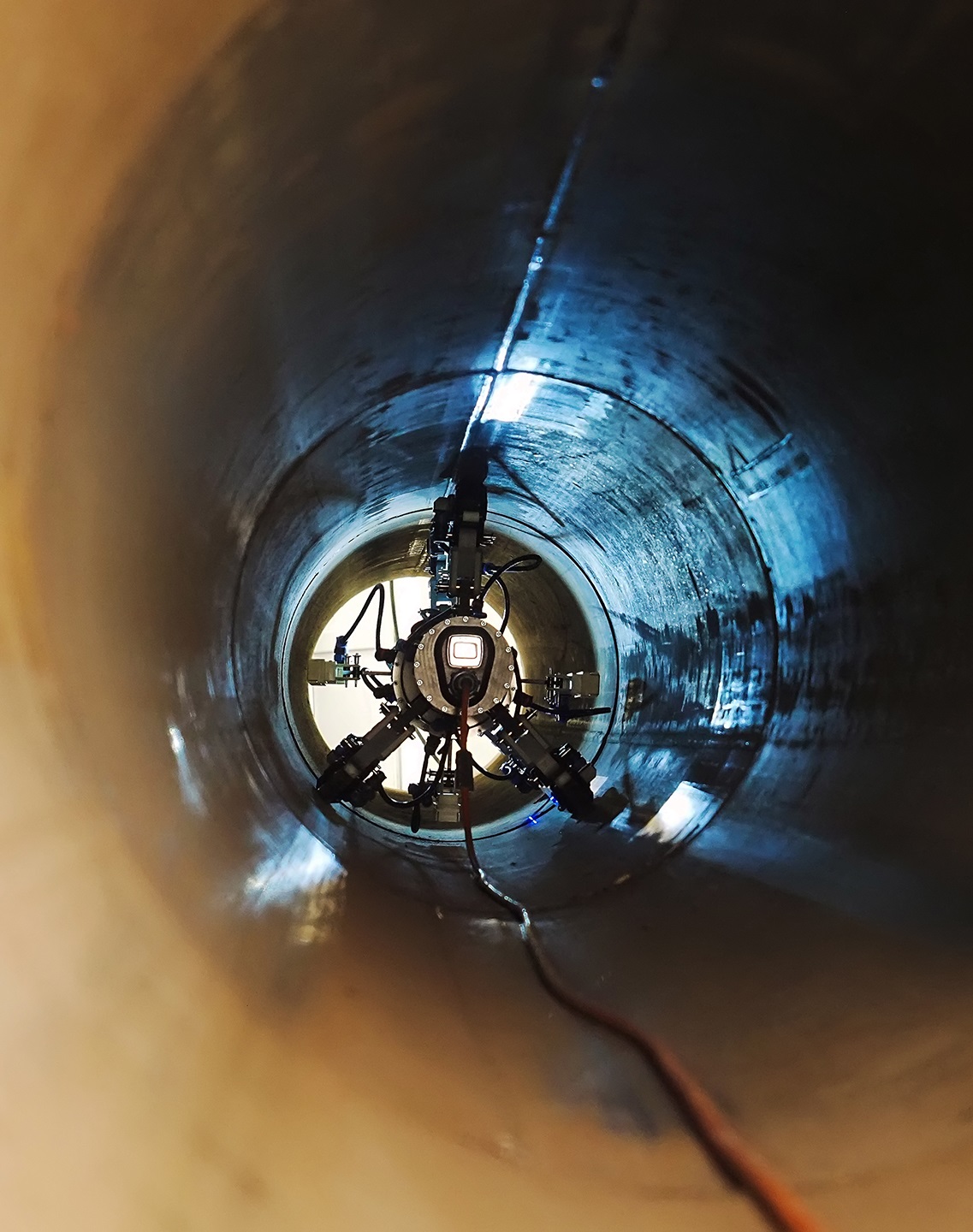
Fast and compact robot for inspecting pipes from DN400 to DN1400
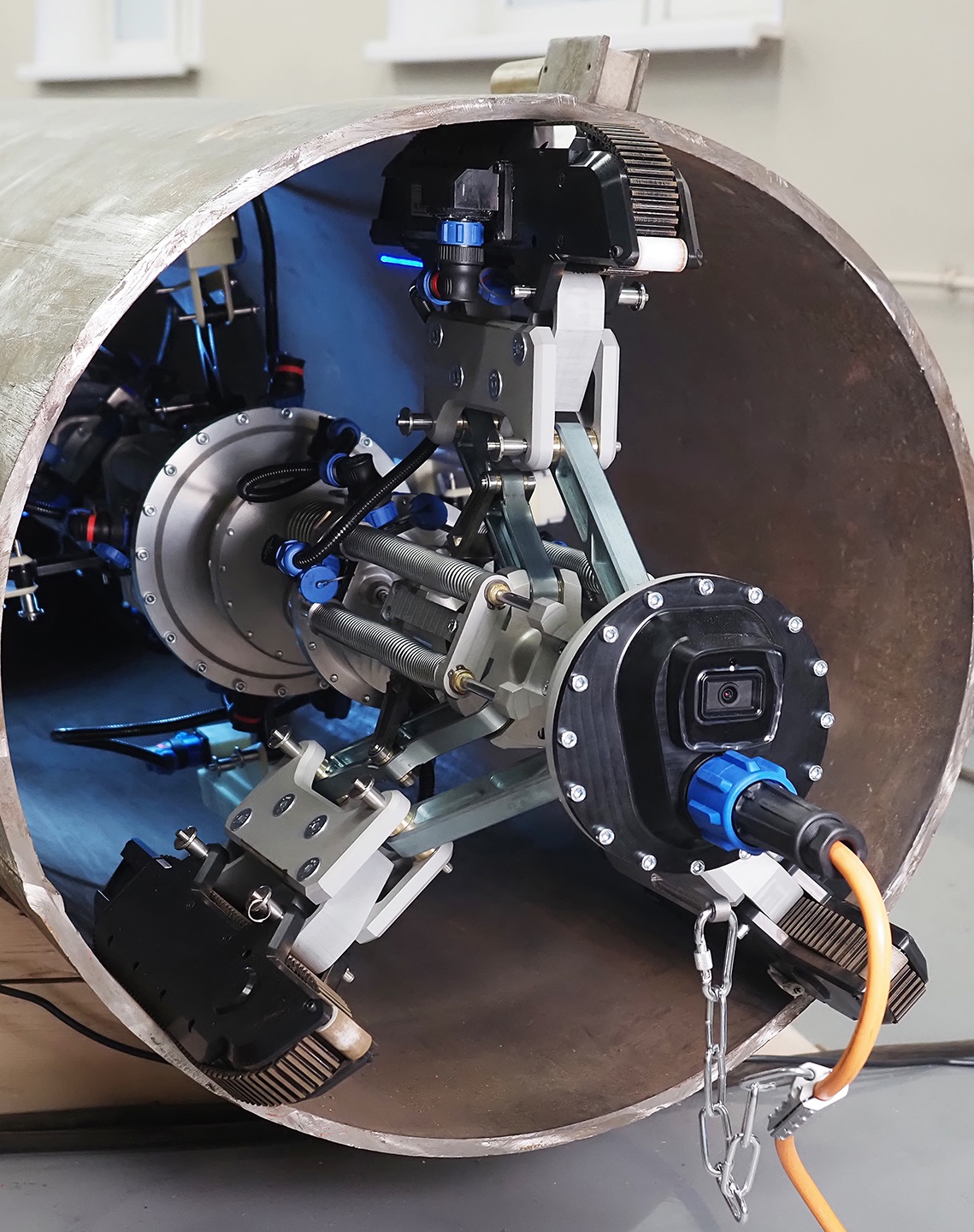
6 cameras & profilometer
Search for metal defects through dirt and deposits with thickness of up to 35mm
No preparation of pipe surface
Search for metal defects through dirt and deposits with thickness of up to 35mm
6 cameras & profilometer
6 built-in cameras and a laser profilometer allow you to analyze the geometry of the pipe
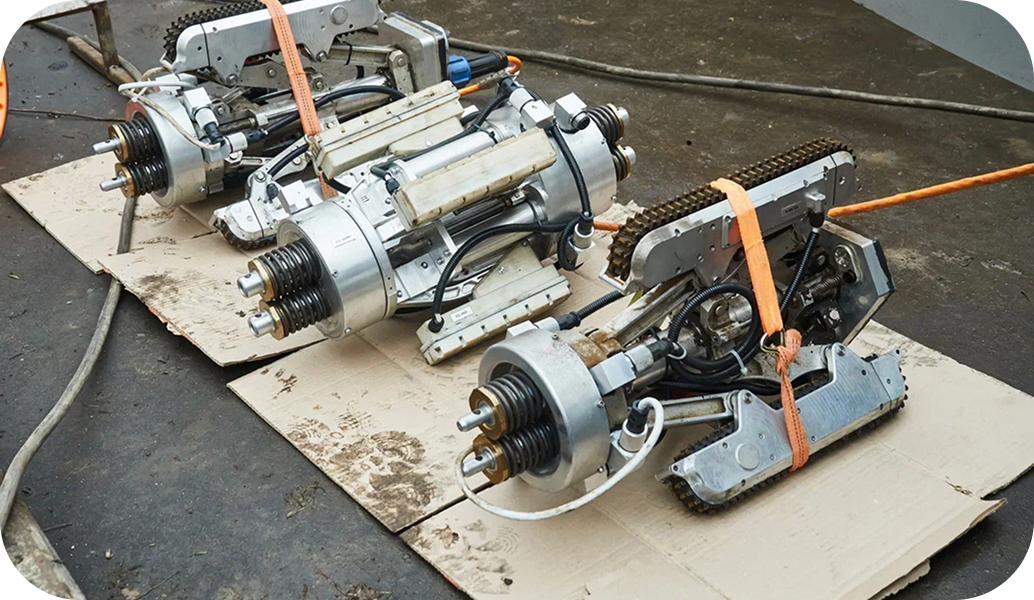
Fast and compact robot
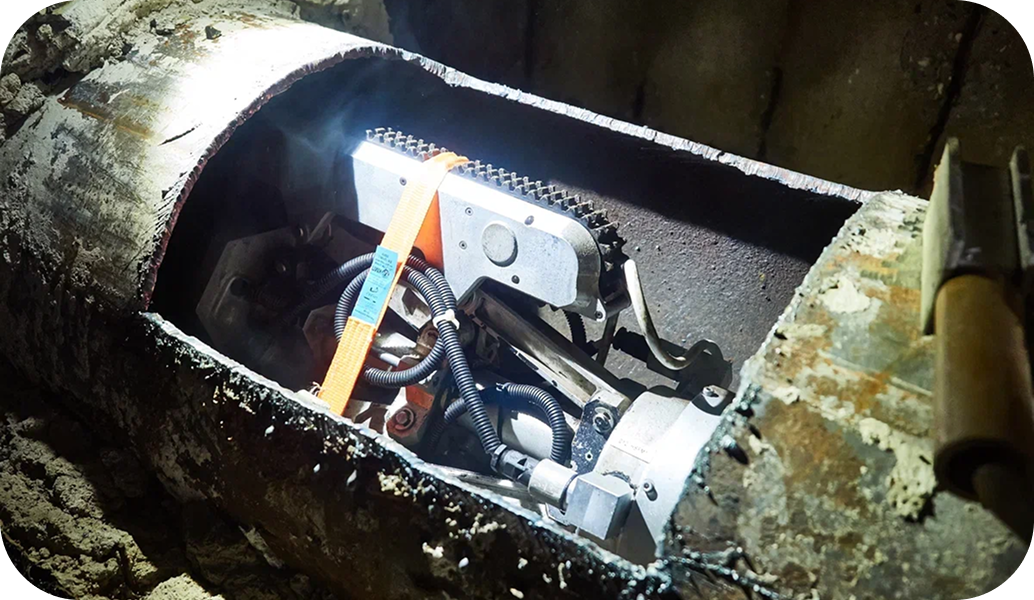
The robot can be loaded through a 400x600 mm cut in the pipe with diameter from DN400 to DN1400. Inspection performance is up to 120 m/h
HeatScan

The HeatScan system is designed to detect pipe defects by a diagnostic robot and evaluation of remaining service life of defective areas.


The HeatScan diagnostic system uses a modified magnetic inspection method to detect defects.

In contrast to the ultrasonic test method, this method is insensitive to pipe surface irregularities caused by corrosion. The robot measures the residual thickness of the metal pipe wall in areas inaccessible for other inspection methods due to deposits and severe corrosion.

This technology requires no preliminary preparation of the pipe internal surface.

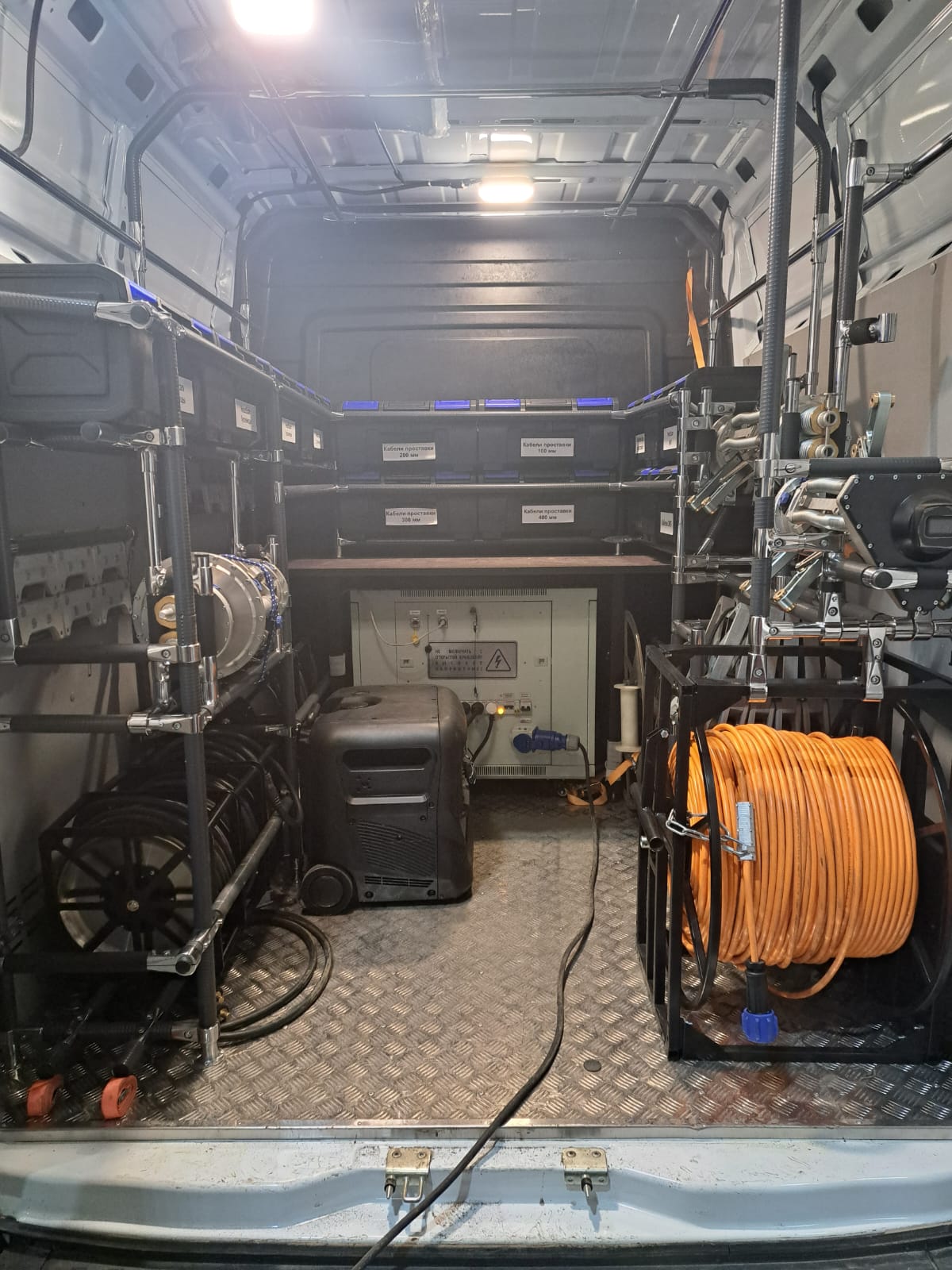
The robot is loaded into the pipe through a cut with minimal dimensions 400 x 600 mm; loading chambers welded into the pipe are not required. No pressurized water in the pipe is required to move the robot and perform the inspection. The robot is controlled by an operator in an auto laboratory placed at the robot loading point.

The diagnostic robot has six tracks and can navigate through heavily contaminated areas, allowing metal inspection through deposits up to 35 mm thick.

Our company provides internal pipe inspection services using the HeatScan system.


Magnetic test technology

Modified magnetic test method which requires no preliminary preparation of the pipe.

Fast and effective method

Testing performance up to 120 m/hour. Requires only 1 operator to perform the inspection

High maneuverability

The robot passes through tees and bends in the pipeline.

Technical specifications

  • Pipeline diameter
    DN400…DN1400
  • Pipe wall thickness
    1.5…16 mm
  • Pipe length available for inspection in one direction from the loading point
    up to 300 m
  • Thickness of deposits on the internal pipe surface
    Up to 35 mm
  • Sizes of detected/measured defects
    Penetration defect, diameter 6 mm Сorrosion damage, diameter 30 mm and depth 20% of the wall thickness
  • Performance
    120 m/h
  • Number of passable bends
    4 pcs
  • Tee passing
    Yes
  • Measurement error with remaining thickness in the defect zone
    15% of the remaining thickness

TEST TECHNOLOGY

Easy installation of Heatscan allows you to get results quickly

1
Installation

Inspection requires access to the pipe: the robot is loaded through a cut in the pipe. The cut can be made in a heat chamber or via a pit.

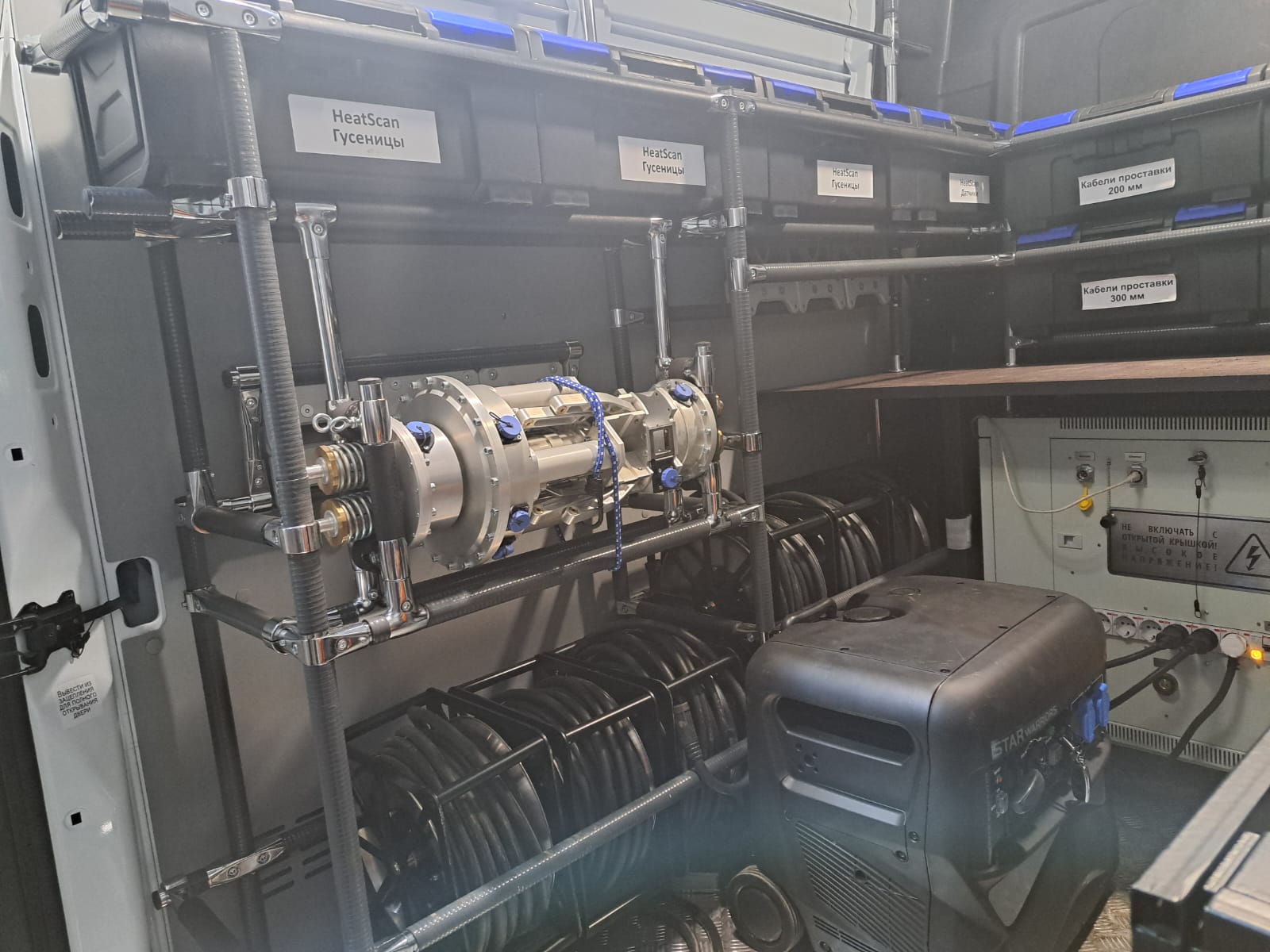
The diagnostic system, including the control panel, is located in the auto laboratory based on a category B vehicle.

2
Connection

Electrical wires must be connected to the ends of the tested pipe section.

Electrical current is transmitted through the pipe; this is necessary to excite magnetic fields with distribution read by the sensors of robot located inside the pipe.

3
Scanning

The diagnostic robot moves inside the pipe scanning 100% of the pipe area. The sensors detect magnetic field anomalies in defect areas.

Using a special algorithm, the program determines the residual metal thickness.

Need More Information?
Our team will be happy to answer any of your questions. Leave your contact information.