

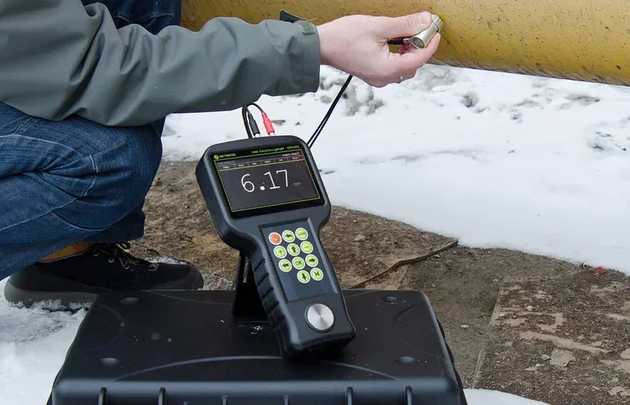
EM1401 UT

Ultrasonic thickness gauge.

Works with EMA+Piezoelectric transducers
ORDER (price on request)
No cleaning, No couplant
Works with EMA+Piezoelectric transducers
Operating gap:
up to 6 mm
Operating gap: up to 6 mm
The operating gap of up to 6 mm (dirt, rust, salt deposits, paint, varnish, enamel, plastic or other non-conductive coatings)
EMA+Piezoelectric transducers in one device
EM1401UT works with EMA and conventional piezoelectric transducers that expands the range of measured thickness and allows to confirm the measured thickness value
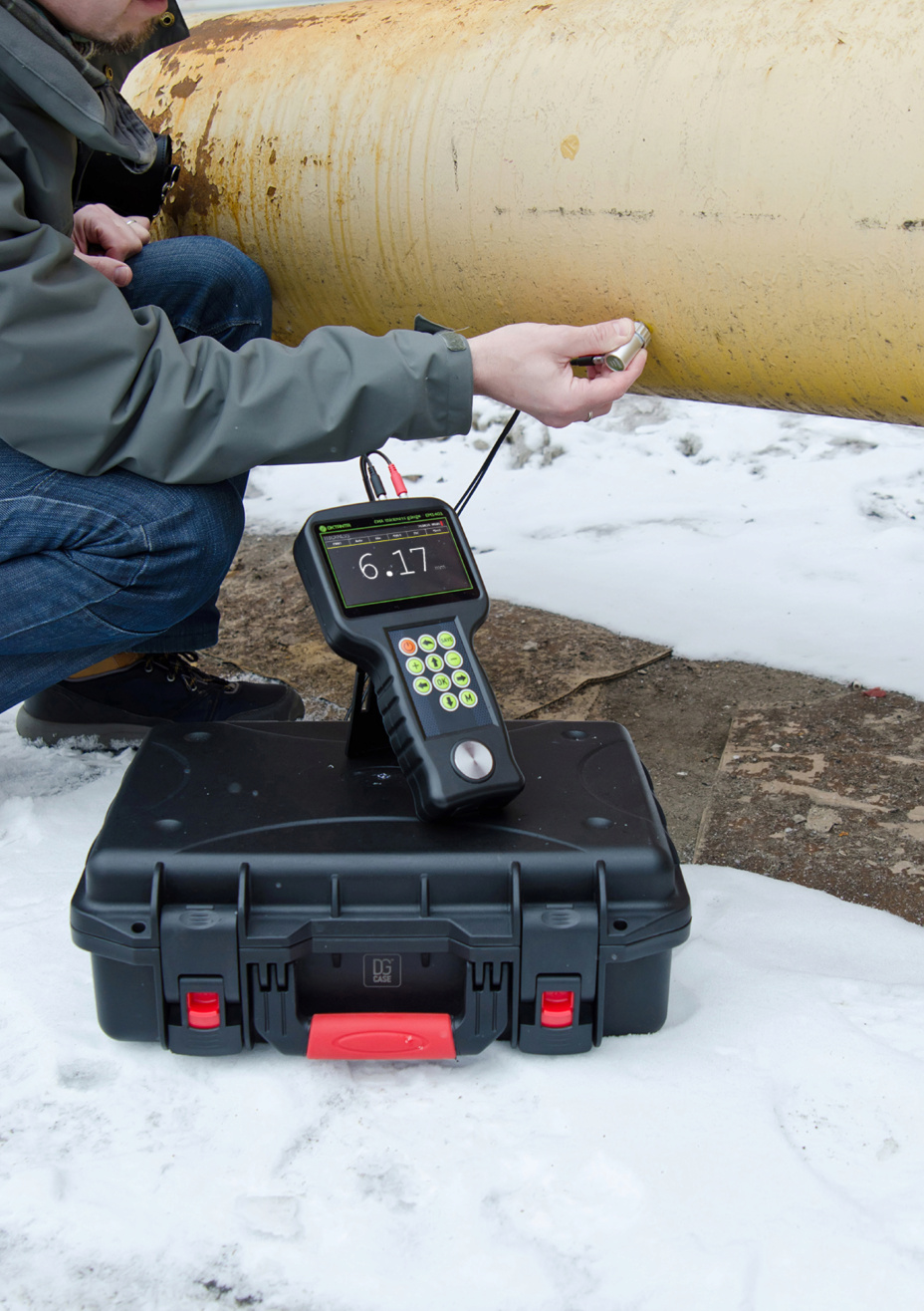
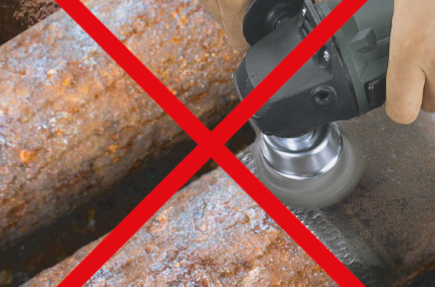
No cleaning, No couplant
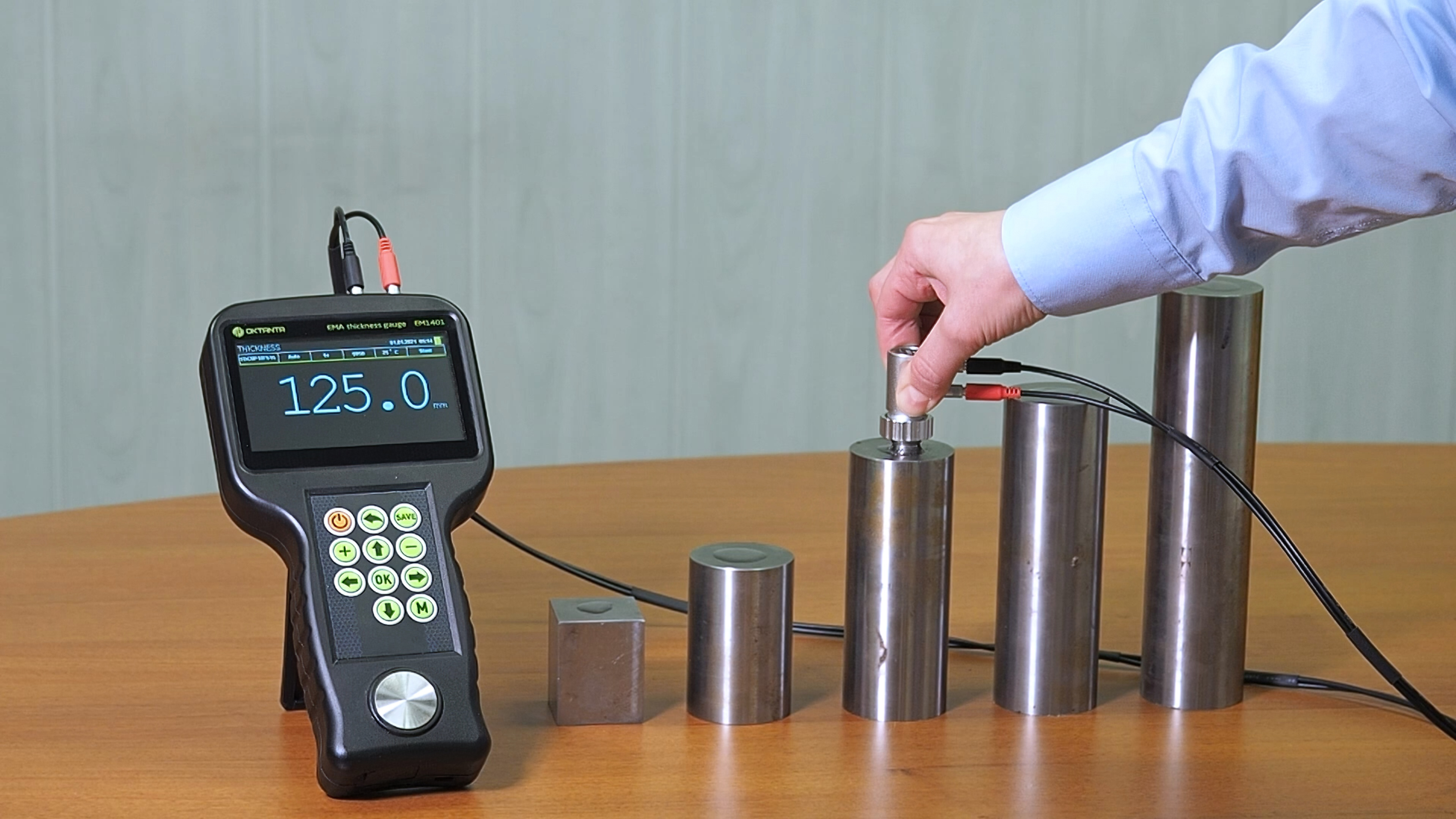
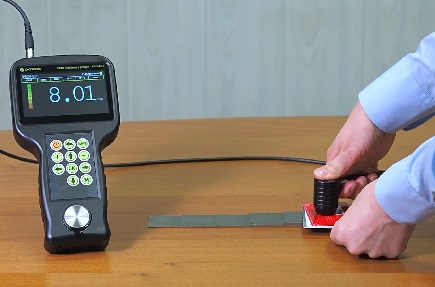
The device measures thickness without usage of couplant and without surface preparation
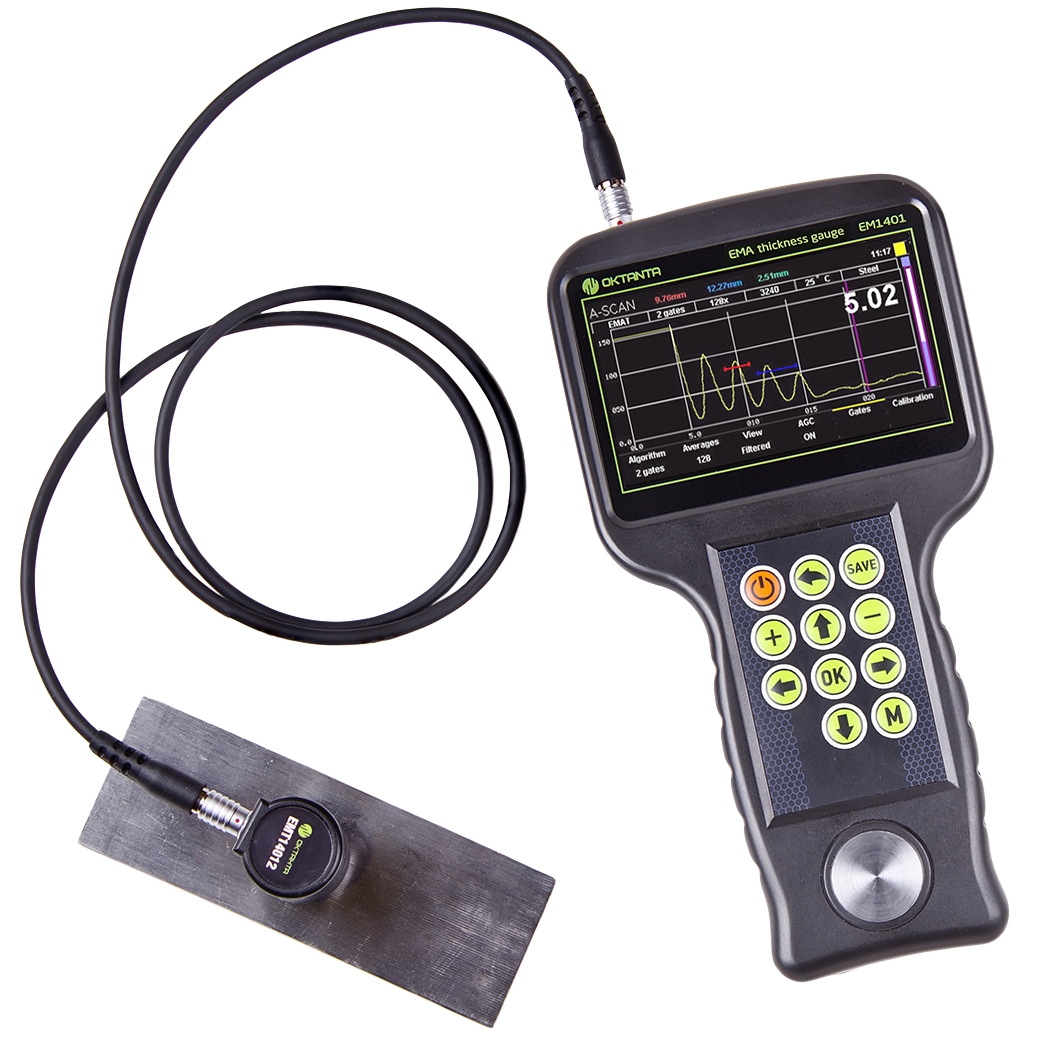
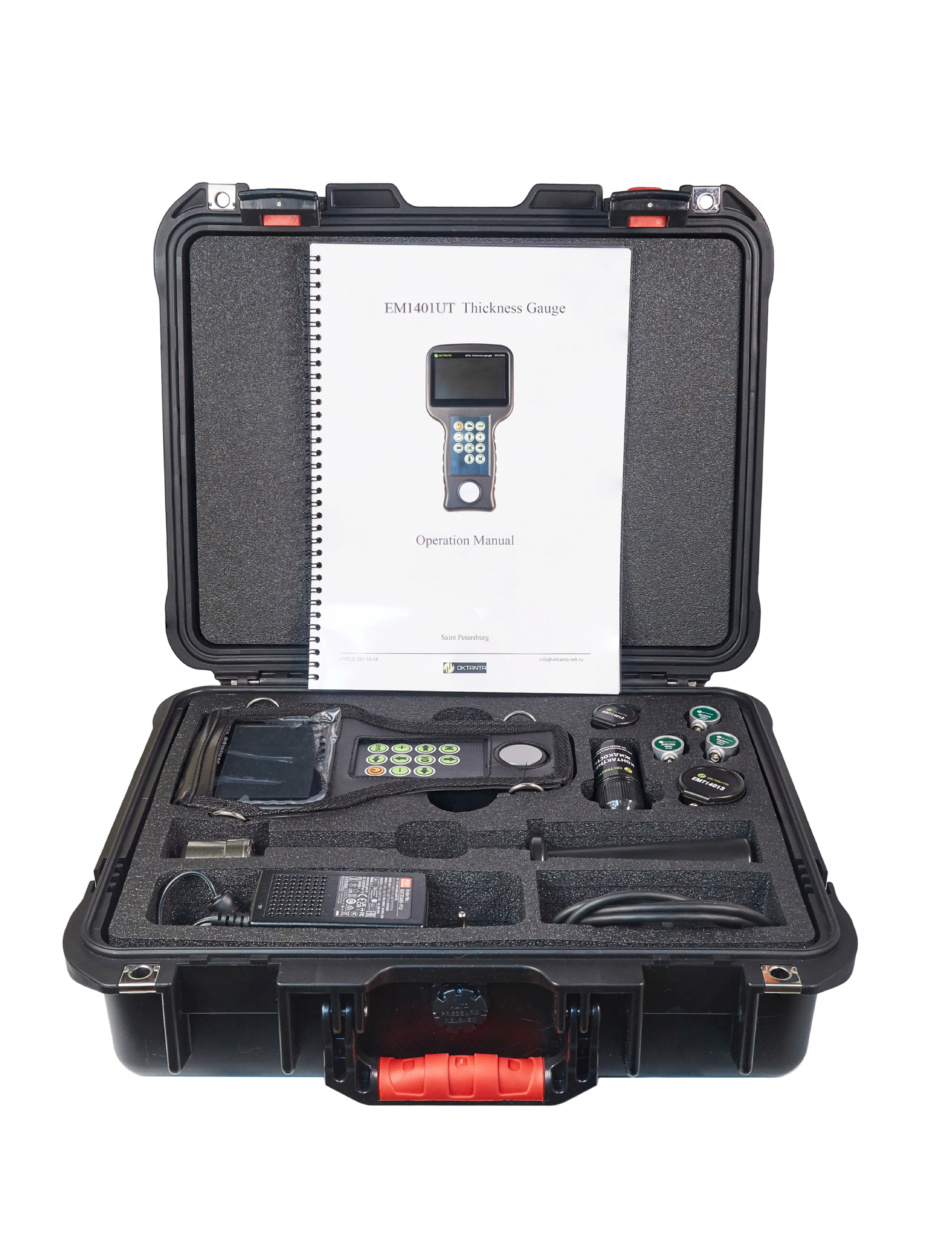
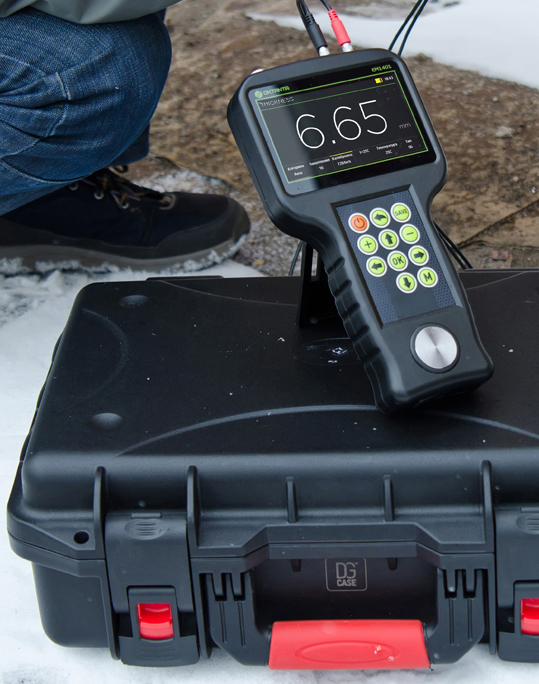
EM1401 UT Thickness Gauge

ElectroMagnetic Acoustic + Piezoelectric ultrasonic thickness gauge combined in one device.


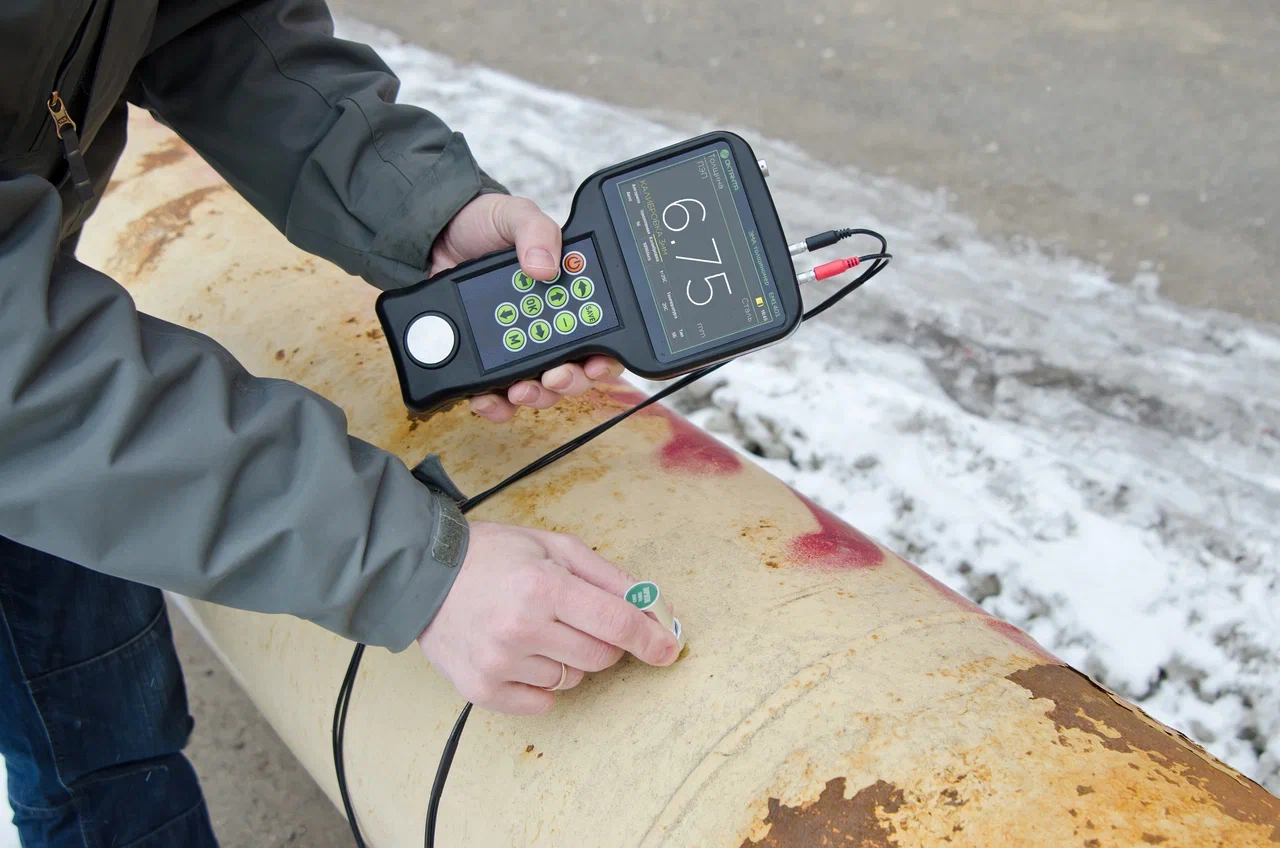
The EM1401 UT ultrasonic thickness gauge measures thickness of steel pipes, sheet metal, rods, and other products made of steel, aluminum and other metals with an operating gap between the transducer and the metal up to 6 mm. The gap can consist of dirt, rust, salt deposits, paint, varnish, enamel, plastic or other non-conductive coating.

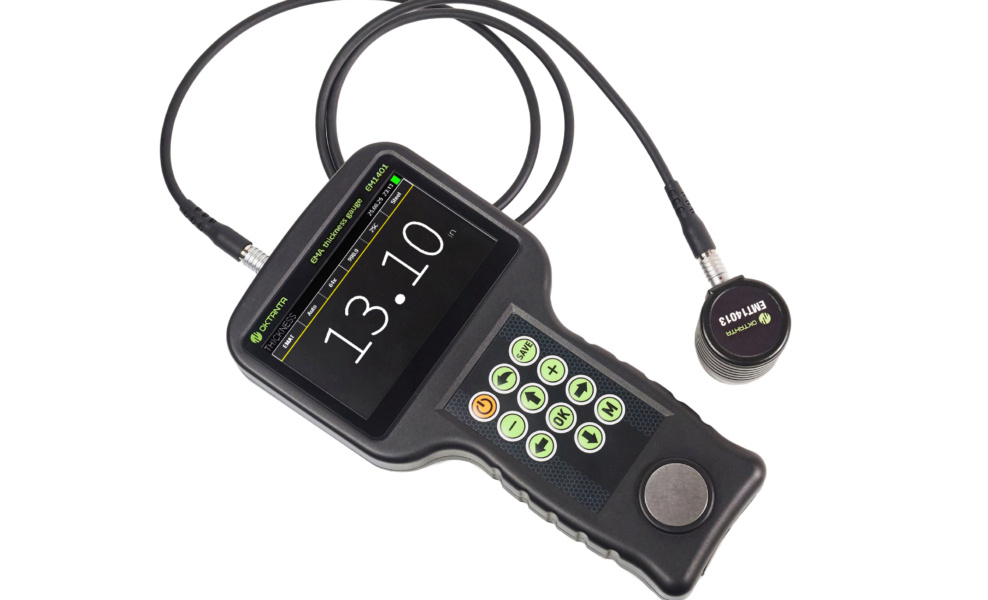
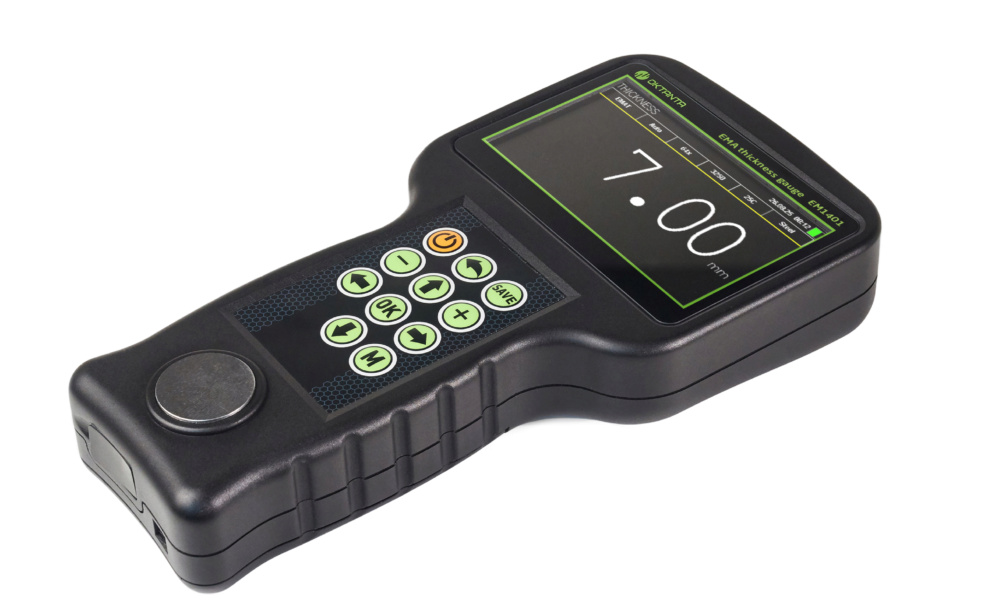
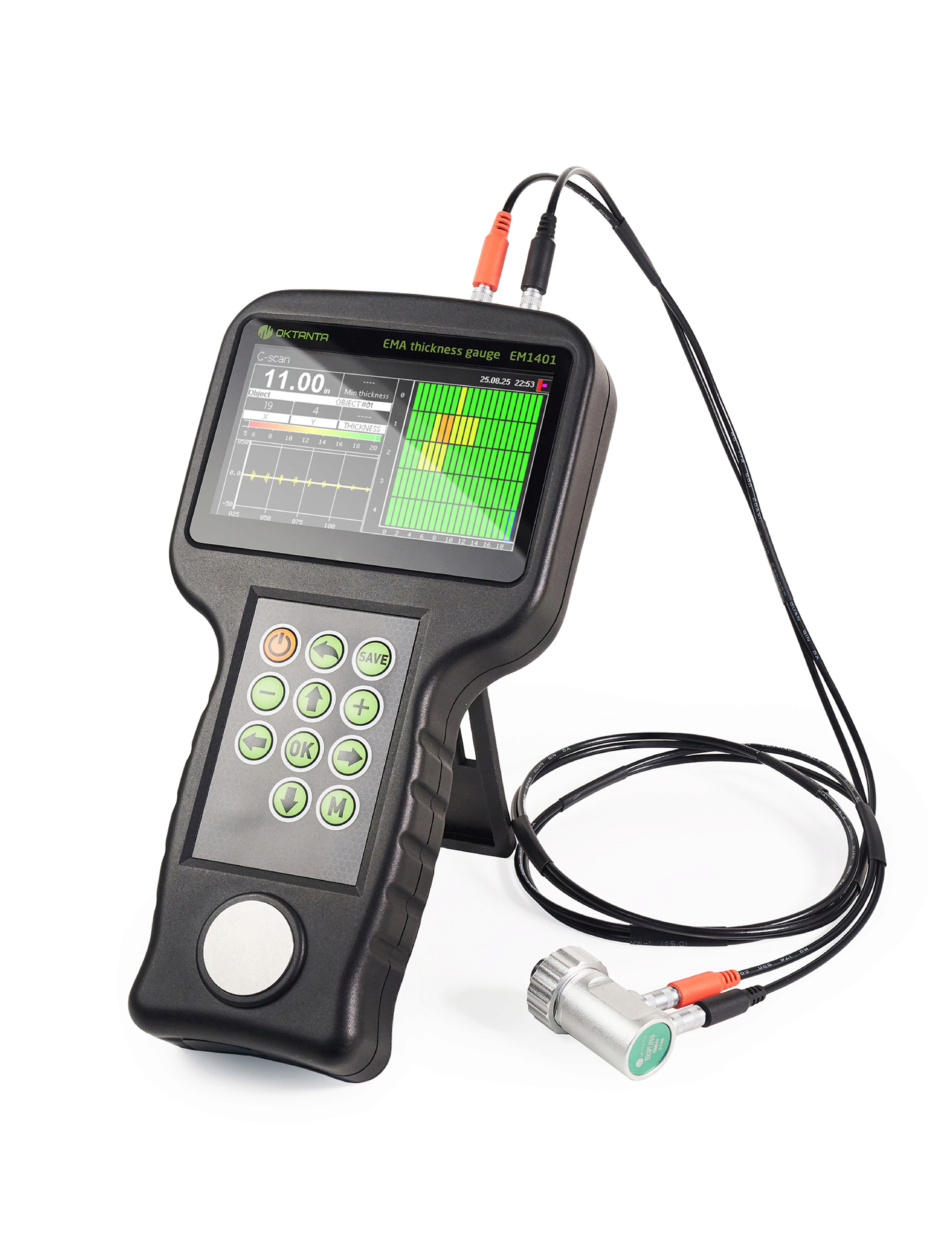
The EM1401 UT thickness gauge has a color display protected by impact-resistant glass.

The device uses a special data processing algorithm that provides correct thickness measurements in the presence of disturbing factors such as metal anisotropy, usage of several reflectors, exposure to external interference. In addition to the automatic thickness measurement mode, the EM1401 UT allows using manual measurement modes based on the first echo and difference between any two echoes. Manual mode is recommended for severely corroded objects.

The EM1401 UT has two independent measuring channels: EMA and Piezoelectric, that ensuring increased inspection reliability. Piezoelectric transducers are recommended for applications where the thickness of deposits on the metal surface prevents the use of EMA transducers and surface cleaning is required.

Fast measurements

Just bring the transducer to the surface of the object being tested

Various surfaces

Works both on flat surfaces and on surfaces with a radius of curvature of 10 mm and more

High-temperature transducer (on request)

For standard EMA transducers, the operating temperature range on the test object surface is -20…+80 °С. Special EMT14014T transducer measures thickness on objects heated up to 750 °C

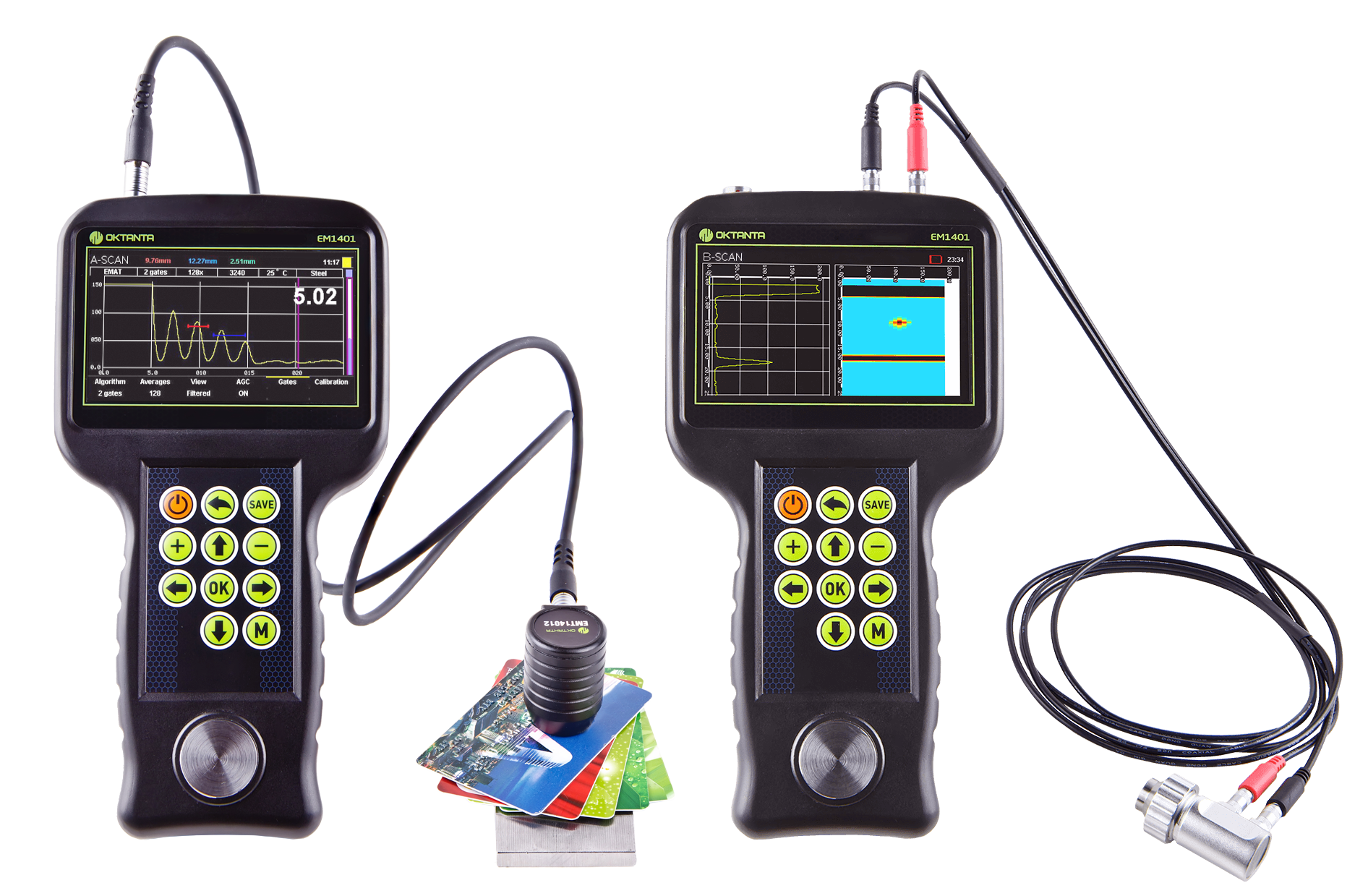
The EM1401 UT allows the user to analyze A-scans, visualize B-scans (three display options), and save data conveniently on C-scans in a matrix form. If necessary, the user can work with gates, select a thickness measurement mode, signal processing parameters, etc.

The EM1401 UT can operate with:
• standard EMA transducers with a permanent magnet.
• piezoelectric transducers:
– transducer 5 MHz, aperture diameter is 10 mm,
– transducer 5 MHz, aperture diameter is 7.2 mm,
– transducer 10 MHz, aperture diameter is 5 mm.

A special high-temperature transducer allows inspection of hot objects heated up to 750 °C.

The EM1401 UT implements a special algorithm that accounts for changes in the rate of sound propagation in metal induced by temperature.

Technical specifications

The EM1401 UT thickness gauge

  • Range of operating ambient temperature
    -20…+50 °С
  • Duration of continuous work without battery recharge
    7 hours
  • Range of sound velocity setting
    1000…9999 m/s with 1 m/s step
  • Highest number of measurements per second
    16
  • Dimensions
    232 x 135 x 44 mm

For EMA transducers:

  • Range of measured thickness for steel
    2…80 mm
  • Range of measured thickness for steel without clearance
    2…200 mm
  • Thickness measurement error 2…25 mm
    0.08+0.001·Н mm
  • Thickness measurement error 25…200 mm
    0.1+0.005·Н mm
  • Permissible gap between the EMT14012 transducer and the test object
    Up to 4 mm
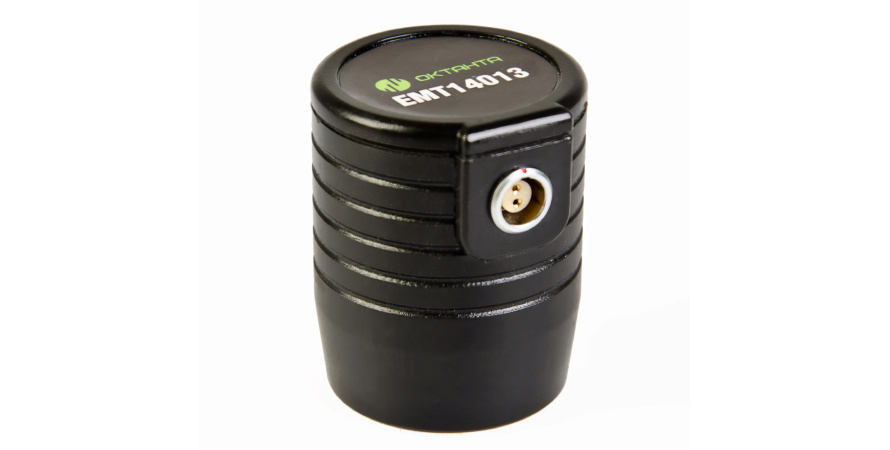
  • Permissible gap between the ЕМТ14013 transducer and the test object
    Up to 6 mm
  • Permissible transducer tilt relative to the normal to the test object surface
    ±25 °
  • Lowest permissible radius of curvature of the test object surface
    ≥10 mm
  • Operating frequency of the device
    4 MHz
  • Range of operating temperature on the test object surface
    -20…+80 °C
    (-20…+750 °C where the EMT14014Т transducer is used)

For piezoelectric transducers:

  • Range of measured thickness for steel
    0.5…300 mm
  • Thickness measurement error 0.5…25 mm
    0.08 mm
  • Thickness measurement error 25…300mm
    0.1 mm
  • Lowest permissible radius of curvature of the test object surface
    25 mm
  • Operating frequency of the device
    5 MHz, 10 MHz
  • Range of operating temperature on the test object surface
    -10…+60 °C

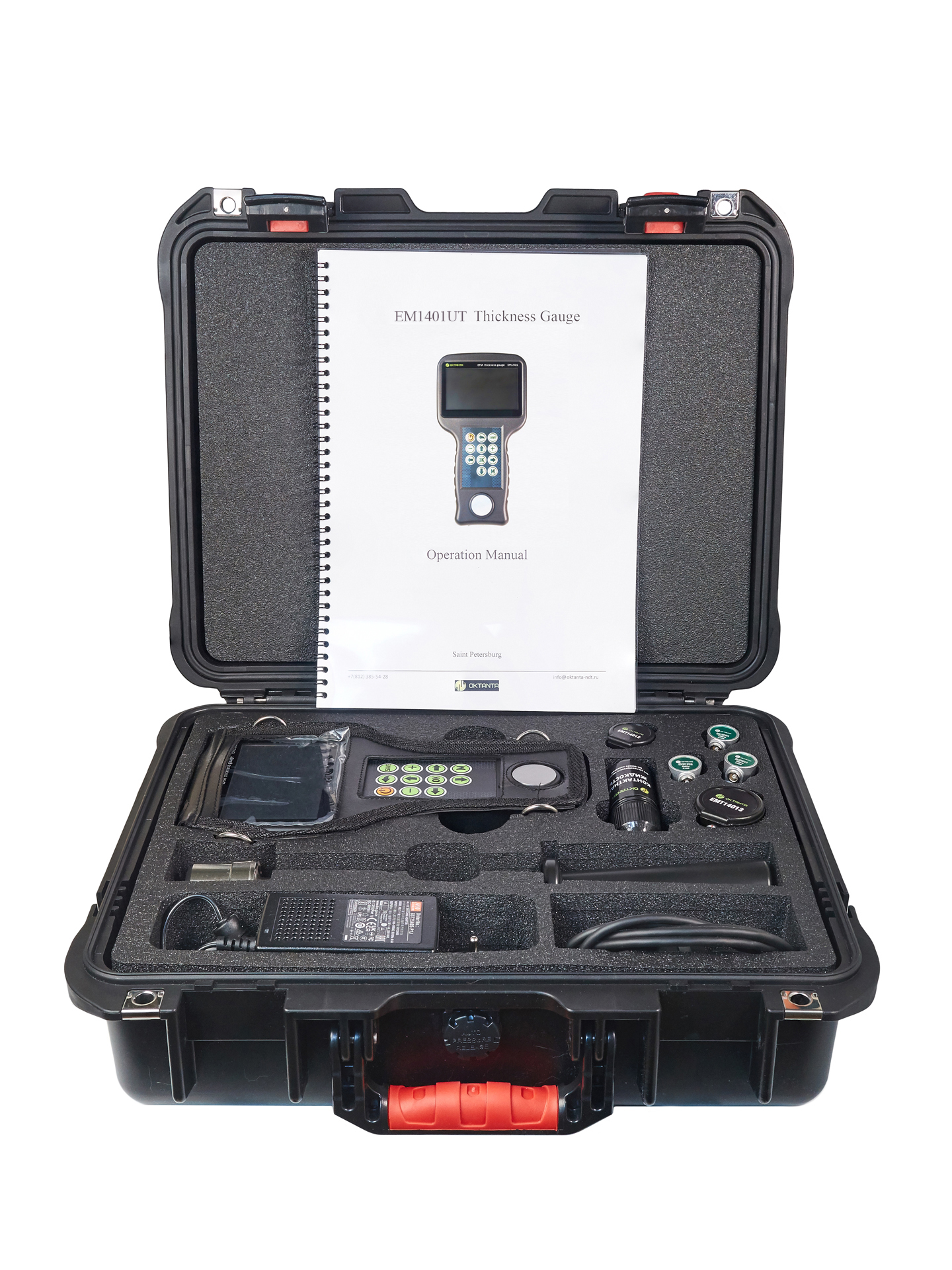
ACCESSORIES

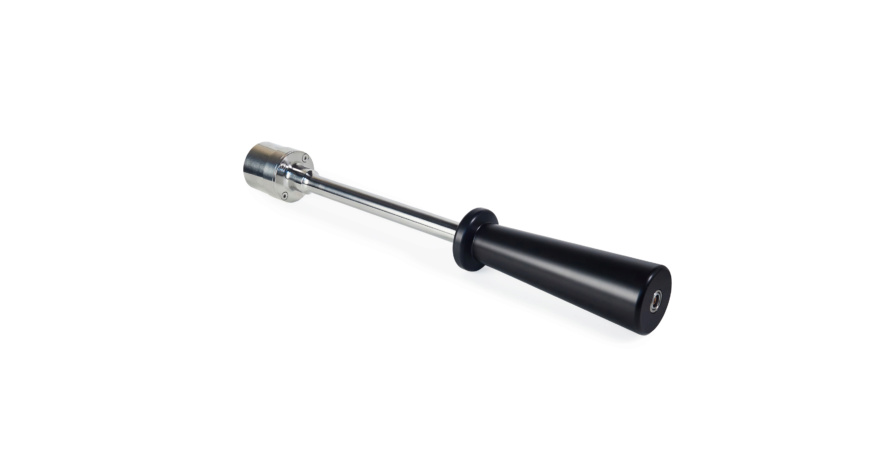
EMT14014T

High temperature EMA transducer for operation with objects heated up to 750 °C
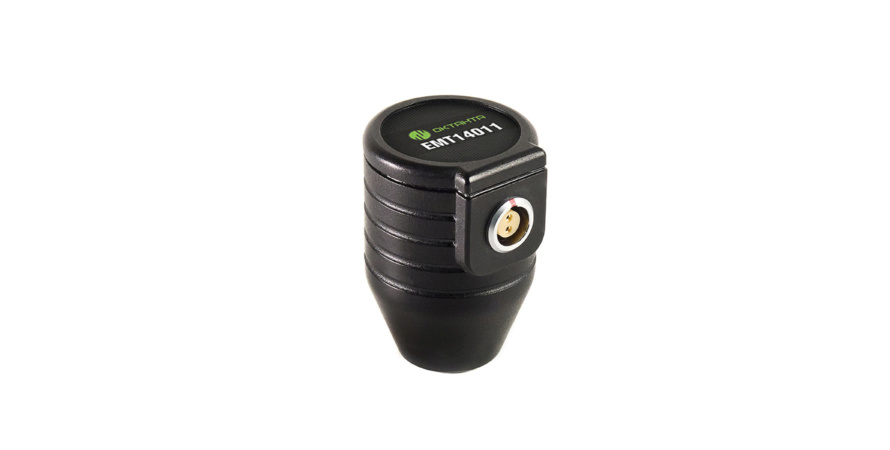
EMT14011

Transducer for operation with a gap up to 3 mm                                                               
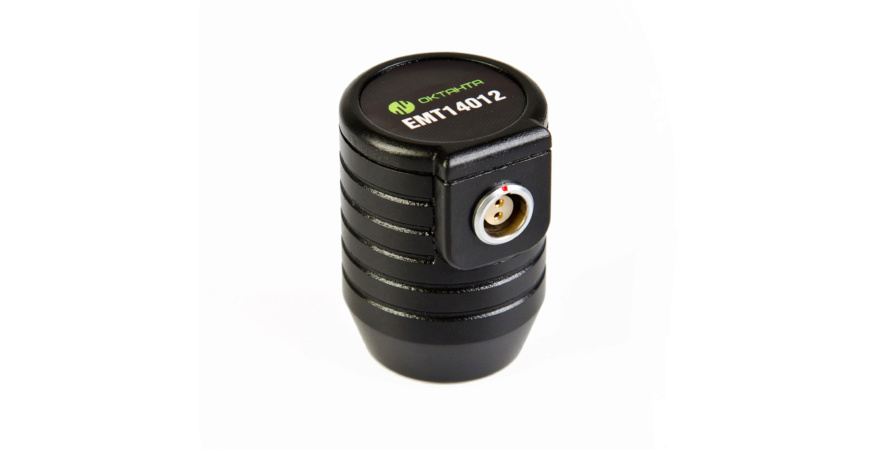
EMT14012

Transducer for operation with a gap up to 4 mm                                                               
EMT14012L

Transducer for operation with a gap up to 4 mm                                                               

EMT14013

Transducer for operation with a gap up to 7 mm                                                               
EMT14013L

Transducer for operation with a gap up to 7 mm                                                               

EDC5P10FS15

Piezoelectric transducer 5 MHz, 10 mm                                                               
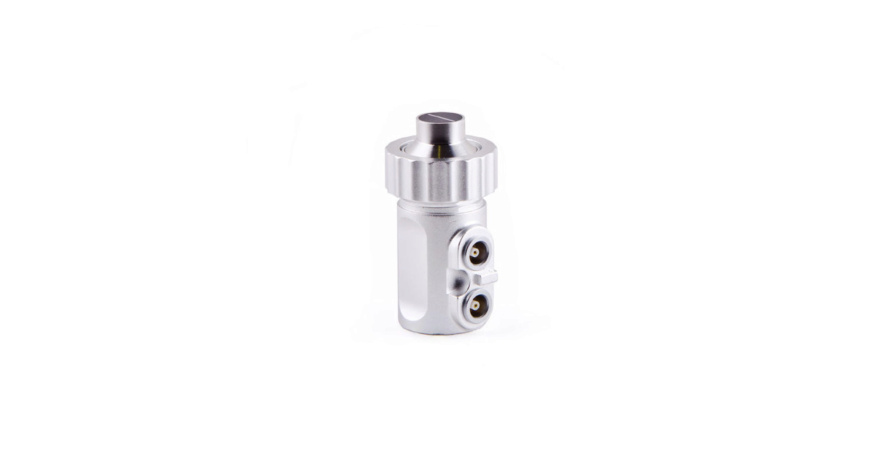
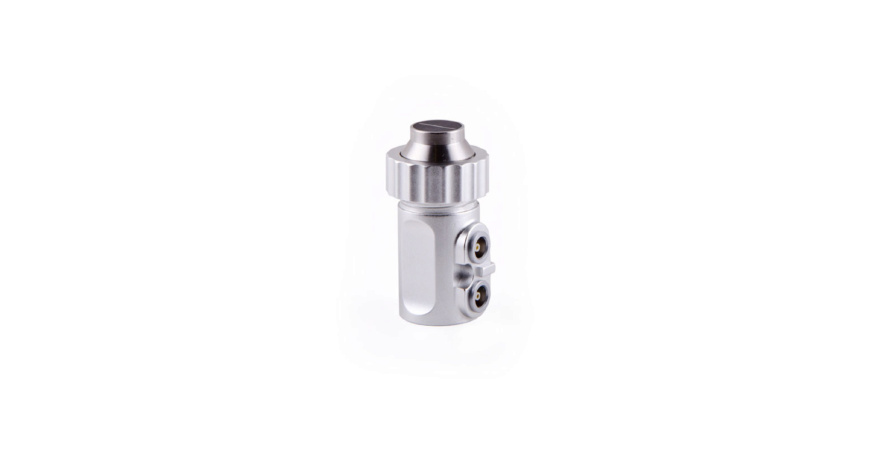
EDC5P7.2FS10

Piezoelectric transducer 5 MHz, 7.2 mm                                                               
EDC10P5F3

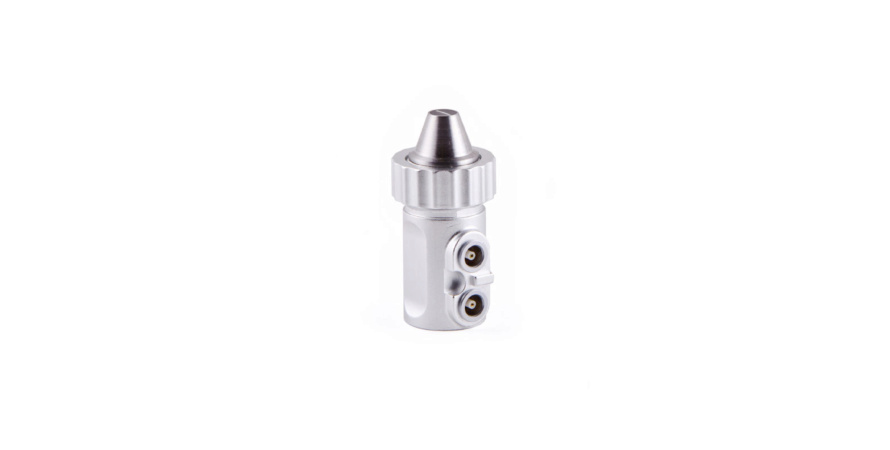
Piezoelectric transducer 10 MHz, 5 mm                                                               
A1401

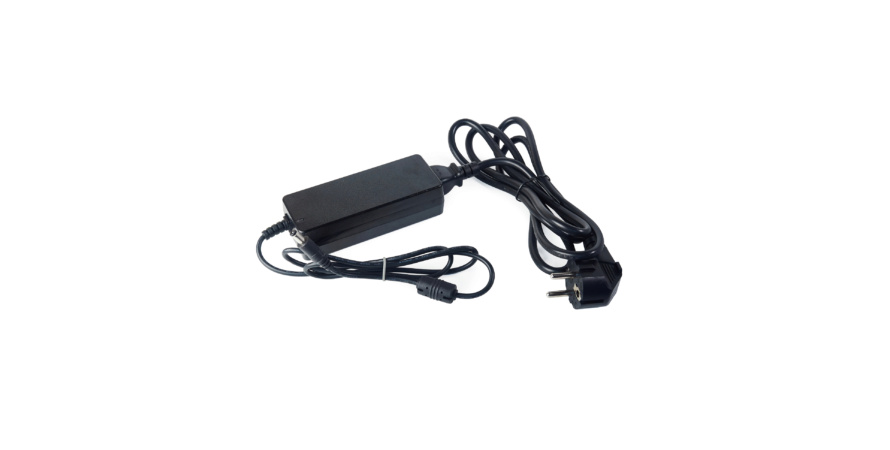
Power adapter for the EM1401, EM1401 UT thickness gauges

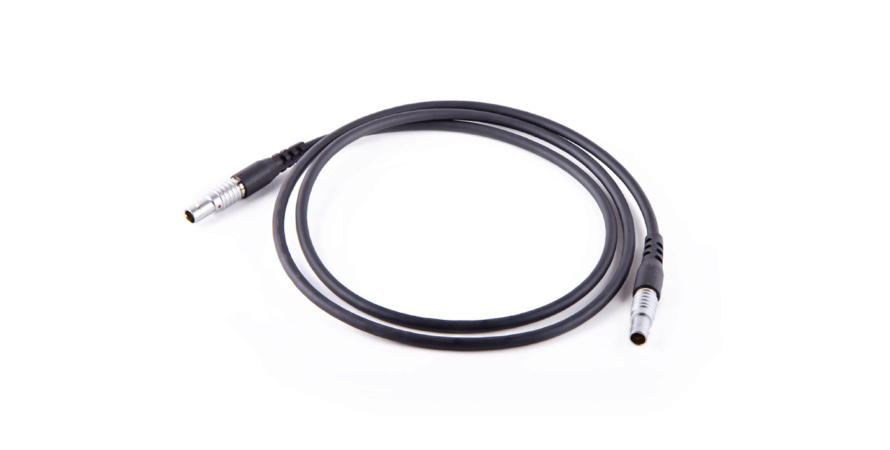
Lemo2-Lemo2

Cable to connect the EM1401 UT, EM1401, EM1501 EMA transducers

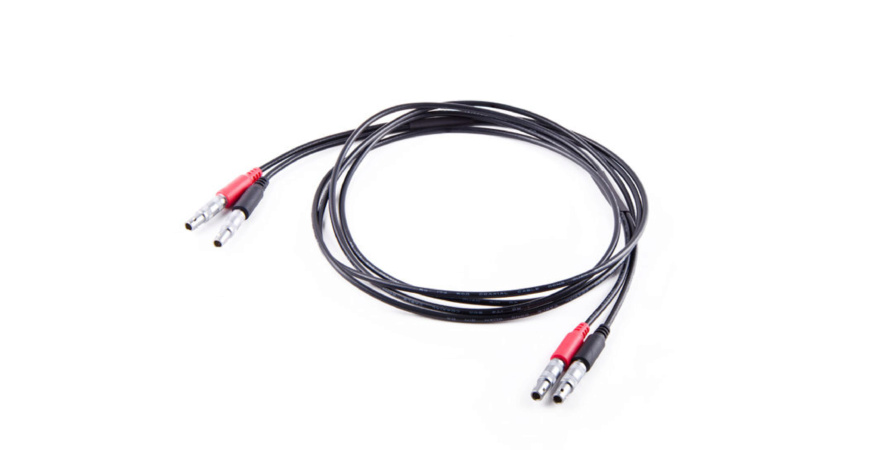
2Lemo 00 – 2Lemo 00

Cable to connect the EM1401 UT, EM1501 piezoelectric transducers

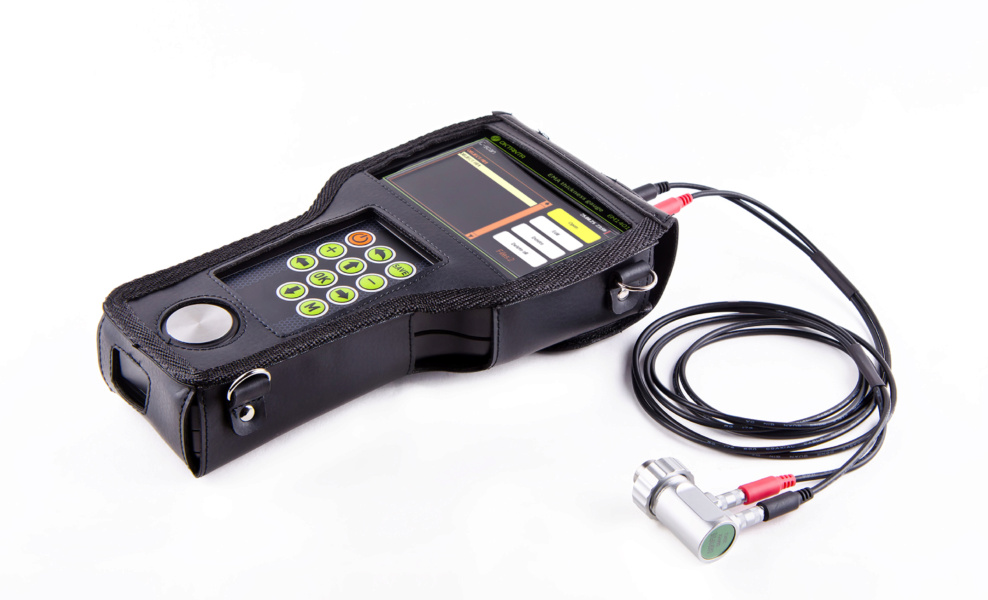
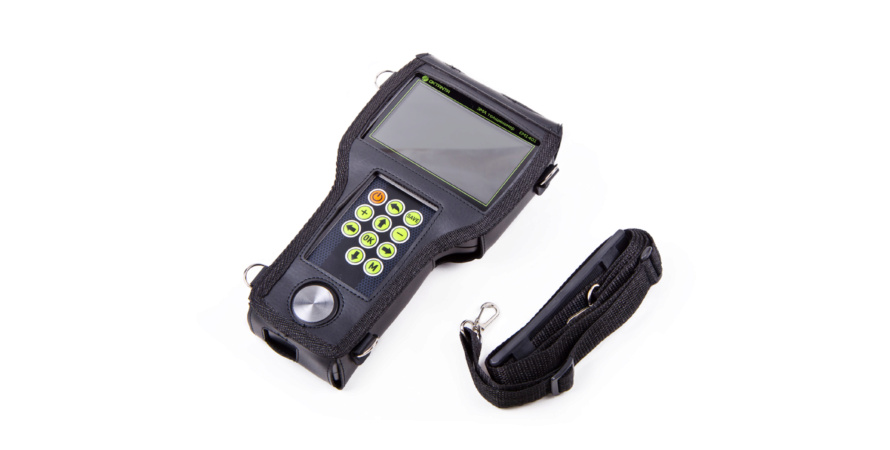
Protective cover EM1401

Protective cover for the EM1401, EM1401 UT thickness gauges

Need More Information?
Our team will be happy to answer any of your questions. Leave your contact information.